How to Achieve Zero Liquid Discharge for Pickling Wastewater?
Keywords: pickling wastewater treatment, MVR evaporator, mechanical vapor recompression, wastewater zero liquid discharge, evaporation crystallization, waste-acid recovery
I. Introduction: Pickling Wastewater—Manufacturing's 'Mandatory Environmental Question'
In the production of stainless steel, photovoltaics, electroplating and other industries, pickling is an irreplaceable step to remove oxide scale from metal surfaces, but the resulting pickling wastewater is a thorny problem: high acidity, containing heavy-metal ions such as iron, nickel and chromium, and fluoride and nitrate, with complex composition and strong corrosiveness.
Under traditional processes, such wastewater is mostly treated by lime neutralization-sedimentation—high reagent consumption, large sludge output, and the sludge is mostly hazardous waste with rising disposal costs year by year. As national supervision of industrial-wastewater discharge keeps tightening, 'zero liquid discharge' (ZLD) has changed from a slogan into a rigid compliance requirement for enterprises.
So-called wastewater zero liquid discharge (ZLD) means the wastewater is fully reused after treatment, with no wastewater discharged to external water bodies, and salts are resourcefully disposed of as solid crystals. On this technical route, the MVR evaporator is becoming the core choice of more and more enterprises. Jiangsu GOJE Group's practice in pickling-wastewater treatment is built around this technology.
II. What Is an MVR Evaporator?
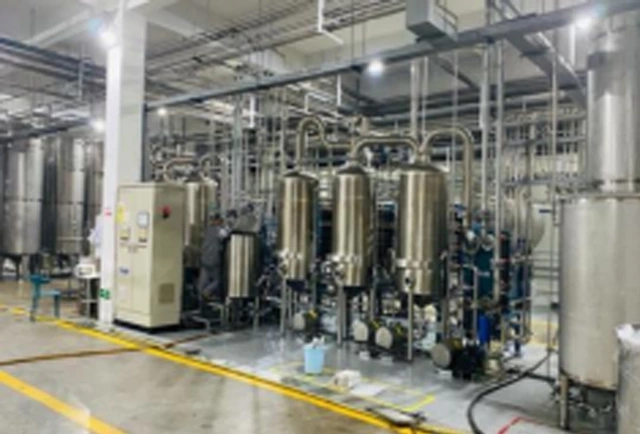
MVR stands for Mechanical Vapor Recompression. Its working principle can be summed up in one sentence: recover the secondary steam generated by evaporation, compress it to raise pressure and temperature, then reuse it as a heat source to heat the material, letting heat circulate and be reused within the system.
Traditional multi-effect evaporation relies on the boiler to continuously supply fresh steam, with high energy cost; but since the MVR evaporator 'turns waste into treasure' with the secondary steam, it only needs a little electric energy to drive the compressor to keep evaporation running. Under normal operating conditions, MVR's evaporation energy per ton of water is usually markedly lower than traditional multi-effect evaporation—the fundamental reason it is widely adopted in wastewater ZLD projects.
For high-salt, strongly corrosive materials like pickling wastewater, the core value of an MVR evaporation system lies in:
Concentration & reduction: evaporate the water out of the wastewater, greatly cutting the volume of liquid that needs disposal;
Water reuse: after appropriate treatment, the evaporation condensate can be reused in production, achieving water circulation;
Salt crystallization: dissolved salts crystallize out after concentration and are normatively disposed of or resourcefully utilized as solid waste.
III. Jiangsu GOJE Group's Pickling-Wastewater ZLD Process Route
Given pickling wastewater's traits of 'strong acidity, complex composition, heavy corrosion,' a single technology can hardly balance compliance and economy. Jiangsu GOJE Group adopts a combined process of 'pretreatment + MVR evaporation concentration + crystallization' to solve various pollution problems step by step:
(I) Pretreatment: remove the 'trouble' first
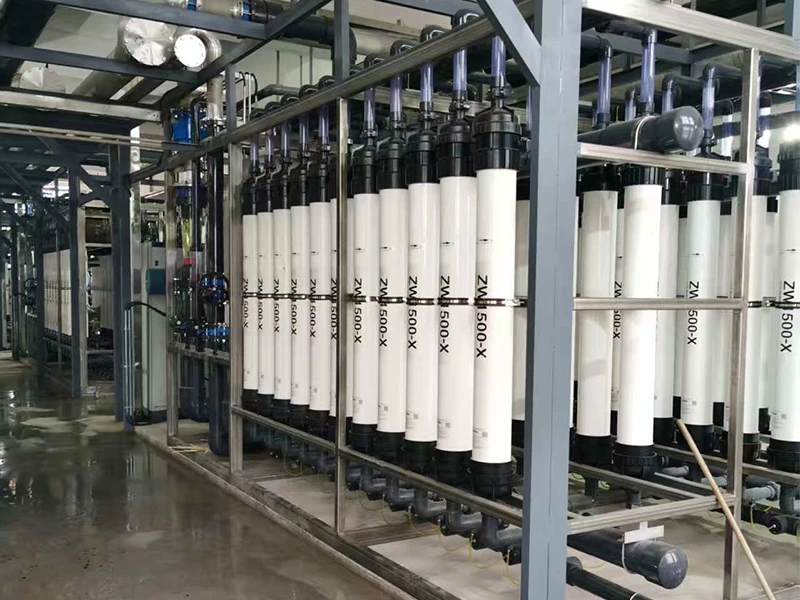
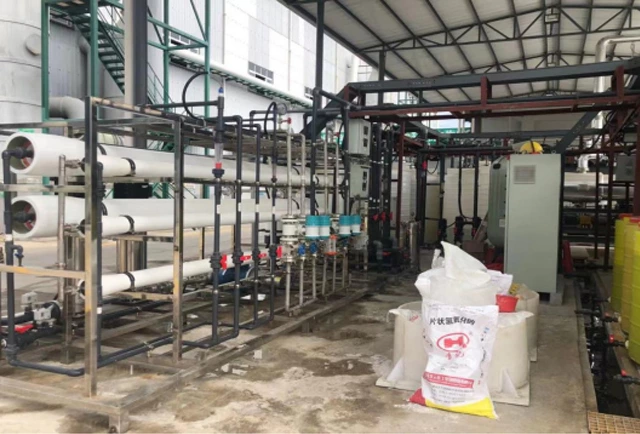
Fluoride ions, calcium-magnesium hardness, suspended solids and some heavy metals in pickling wastewater directly affect the stable operation of the evaporator. Through chemical precipitation, pH adjustment and coagulation-sedimentation pretreatment, calcium fluoride, metal hydroxides and other precipitates are first separated, both reducing the evaporator's scaling risk and recovering some valuable metal sludge.
(II) MVR evaporation concentration: low energy consumption, small footprint
The pretreated wastewater enters the MVR evaporation system. The system operates at a relatively low temperature, giving more leeway in corrosion-resistant material selection; secondary-steam compression reuse makes energy consumption significantly lower than traditional multi-effect evaporation. For small-volume, intermittently discharged pickling-wastewater scenarios, the MVR unit's flexible start-stop characteristic is also friendlier.
(III) Evaporation crystallization: the 'last mile' of wastewater
The concentrated liquid enters the crystallizer, salts precipitate as crystals, are separated by centrifuge and shipped out for normative disposal; the condensate returns to the production loop for reuse. Thus wastewater is not externally discharged, salts become solid waste and water is reused—forming a complete ZLD closed loop.
[Here you may add: your company's typical project treatment scale, influent/effluent water quality, operating cost per ton of water and other measured data]
IV. Why MVR, Not Traditional Multi-Effect Evaporation?
Table 1 Comparison of MVR Evaporator vs. Traditional Multi-Effect Evaporation
| Comparison Dimension | MVR Evaporator | Traditional Multi-Effect Evaporation |
| Energy source | Electricity drives compressor; secondary steam reused in cycle | Continuously consumes fresh steam |
| Operating energy consumption | Low; normal operation only needs a little supplemental electricity | High; steam cost dominates operating expense |
| Start-stop flexibility | Flexible start-stop; suits fluctuating flow | Long heat-up/cool-down; suits continuous stable operation |
| Footprint | Relatively compact | Multi-effect series; more equipment |
| Automation level | High; one-click start-stop, remote monitoring | Relatively low |
| Applicable scenario | Small-to-medium flow, fluctuating water quality, inconvenient steam source | Large flow, with sufficient steam source |
For most pickling-wastewater generators, there may not be surplus steam on site, and wastewater volume fluctuates with production rhythm—this is exactly the MVR solution's advantageous range.
V. The Triple Value Brought by Zero Liquid Discharge
First: environmental compliance. Wastewater is no longer discharged externally, eliminating the risk of excessive discharge and environmental penalties at the source, helping enterprises calmly cope with increasingly strict discharge supervision.
Second: resource recovery. The acid and metal salts in pickling wastewater are not worthless. Through evaporation crystallization and salt-splitting, some crystal salts and metal sludges can be resourcefully utilized, and waste acid can be regenerated and reused through evaporation, partly converting 'treatment cost' into 'resource revenue.'
Third: controllable cost. Although MVR equipment's one-time investment is higher than traditional equipment, its low operating energy consumption, low reagent consumption and small sludge-disposal volume give it a superior long-term comprehensive operating cost—also the key consideration for whether a ZLD scheme can be implemented.
VI. Frequently Asked Questions (FAQ)
Q1: How is corrosion protection solved for MVR evaporators treating pickling wastewater?
Pickling wastewater contains chloride and fluoride ions and is strongly corrosive. Engineering practice usually selects evaporators of titanium, duplex steel or internally lined anti-corrosion material per water quality, combined with pretreatment to lower the concentration of corrosive components and extend equipment life.
Q2: Roughly what is the treatment cost per ton of pickling wastewater with an MVR evaporator?
Operating cost is closely related to water quality, boiling-point elevation, electricity price and other factors, with large variation. Generally, MVR electricity consumption per ton of water evaporation is on the order of tens of kWh; specifics require material balance and economic calculation based on water quality.
Q3: What to do with the crystallized mixed salt?
Mixed salt is normatively disposed of per the identification result of its hazardous-waste attributes; if high-purity single salts (e.g., sodium sulfate, sodium chloride) are obtained through salt-splitting crystallization, there is an opportunity for resource utilization, significantly lowering disposal cost.
Q4: Does ZLD renovation require production-stop construction?
In most cases it can be implemented in phases around the enterprise's maintenance window; the pretreatment unit and the evaporation unit can be installed and commissioned separately, and the specific arrangement needs evaluation against site conditions.
Conclusion: Turn Environmental Pressure Into Green-Development Competitiveness
Wastewater zero liquid discharge is not a multiple-choice question but a mandatory one for manufacturing enterprises. Jiangsu GOJE Group's pickling-wastewater treatment scheme centered on the MVR evaporator, with the complete closed loop of 'pretreatment + evaporation concentration + crystallization reuse,' helps enterprises recover resources and control costs while meeting compliance.
If you are looking for a technical scheme for the ZLD renovation of pickling or salt-containing wastewater, welcome to contact Jiangsu GOJE Group for targeted process design and economic calculation.