Pharmaceutical Wastewater Treatment: If Pretreatment Is Done Poorly, All the Downstream Evaporation and Advanced Treatment Are a Waste of Money
Many pharmaceutical companies have stepped into the same pit when renovating their wastewater stations: feeding high-salt mother liquor directly into the evaporator, only to have the heat-exchanger tubes clogged within three months; the evaporated condensate COD seems reduced, yet still shocks the sludge when entering the biological system; the advanced-treatment stage swaps activated carbon batch after batch, but effluent color still fluctuates between dark and light.
The problem often lies not in a single piece of equipment, but in the lack of a true 'relay' relationship among the three stages—pretreatment, evaporation and advanced treatment. The difficulty of pharmaceutical wastewater—especially chemically synthesized and API wastewater—has never been a single high pollutant concentration, but the superposition of high salt, high toxicity and poor biodegradability. Any stage trying to 'charge ahead alone' merely shifts the cost to the next stage.
The core task of pretreatment is not to lower COD, but to 'defuse the bomb'
Before pharmaceutical wastewater enters the evaporator, the two most feared things are: one, scale-forming calcium/magnesium/silica; two, biologically toxic residues. The former clogs equipment, the latter clogs the biology.
Take high-concentration pharmaceutical wastewater containing iodine or halides as an example: direct evaporation carries volatile toxic components into the condensate—seemingly desalinated, but actually transferring the trouble to the back end. A viable approach is to first perform targeted redox or precipitation, converting iodides and residual active ingredients into non-inhibitory forms before entering evaporation. Another common route is Fenton or ozone-catalyzed oxidation; the purpose is not to drop COD from tens of thousands to a few hundred, but to break large cyclic structures into small-molecule organic acids, lifting the condensate's biodegradability from 0.1 to above 0.3.
The mark of qualified pretreatment is simple: can the evaporator's continuous operating cycle last beyond the cleaning window, and does the sludge activity obviously drop after the condensate enters the biological tank?
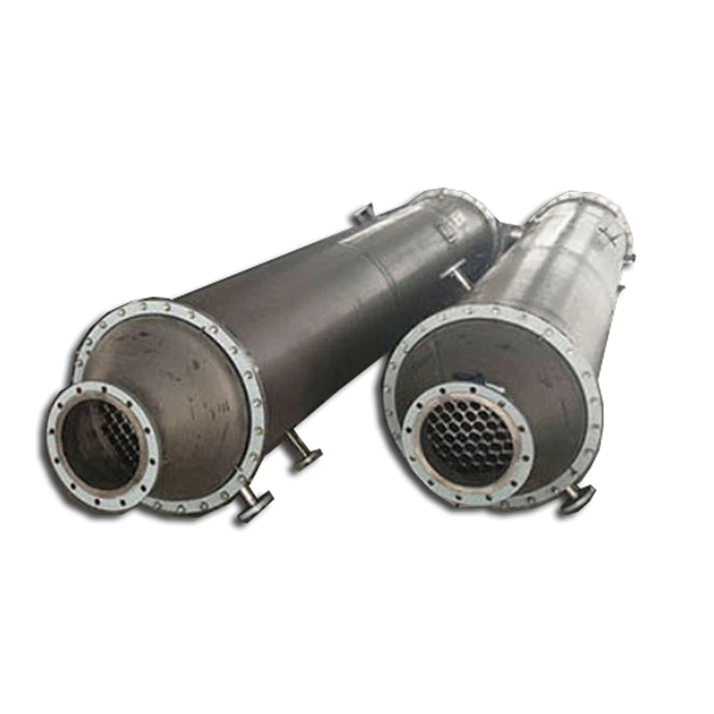
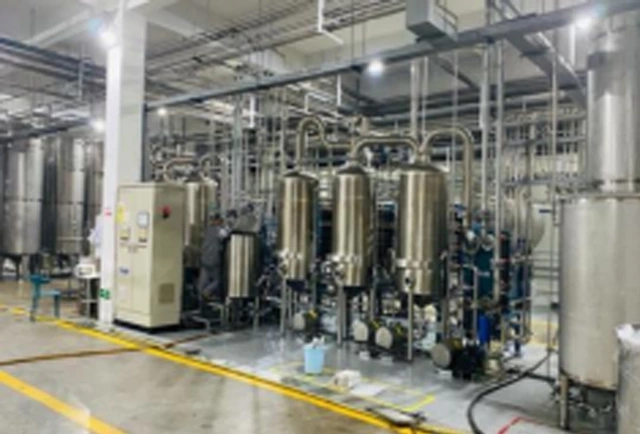
Evaporator selection: MVR and multi-effect have no absolute merit, only operating-condition fit
The debate over MVR versus multi-effect evaporation is fairly clear in the pharmaceutical-liquid field. Multi-effect evaporation consumes about 3 to 5 times the steam energy of MVR, but has lower initial investment and higher tolerance for load fluctuation, suiting moderately flowing wastewater with relatively stable composition and controllable scaling rate. MVR consumes only 20%–30% of multi-effect's energy, but demands far stricter pretreatment—if suspended solids, non-condensables and scale-prone components are not thoroughly removed, compressor efficiency and operational stability deteriorate rapidly, and initial investment runs more than 30% above an equal-capacity multi-effect unit.
A more pragmatic strategy in practice is salt- and grade-splitting: high-salt, highly toxic mother liquor goes through 'pretreatment + multi-effect evaporation' for stability, while low-concentration rinse water goes through MVR to cut operating cost. Concentrated mother liquor from evaporation is disposed as hazardous waste externally; the condensate must pass through back-end biological or advanced oxidation as a safety net—it must not be discharged or reused directly just because it 'looks clear.'
Advanced treatment is not a fuse, but finish machining
Many projects treat advanced treatment as the 'final gate,' relying on activated carbon or ozone to catch all the leaks upstream, only to see operating costs spiral out of control.
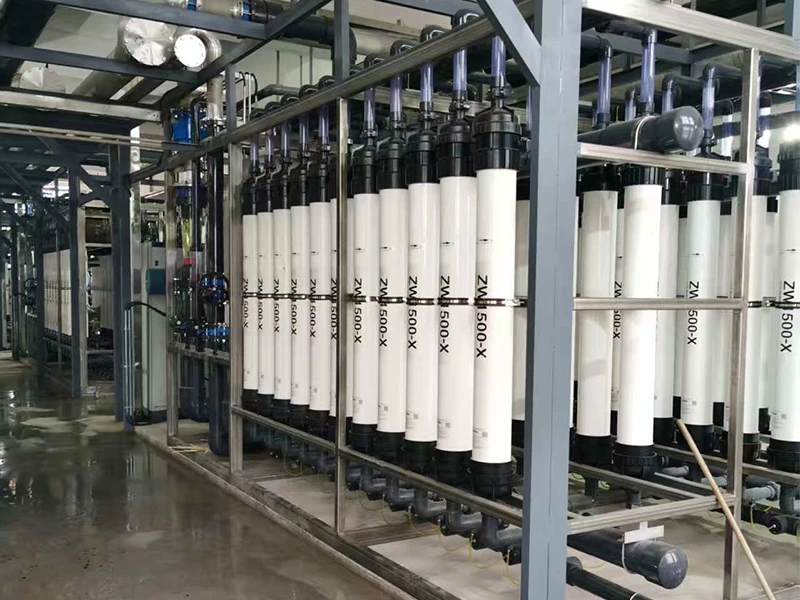
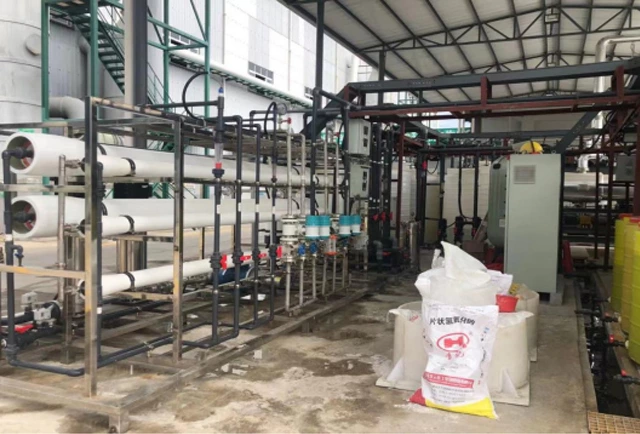
The effective combination for pharmaceutical-wastewater advanced treatment usually depends on what the first two stages leaked. If evaporated condensate carrying residual refractory organics enters the biology, then the biological effluent should go through ozone-catalyzed oxidation or Fenton to break the residual chromophoric groups and trace active ingredients—only then is it economically sensible. If front-end quality-splitting is done well, the advanced stage may need only coagulation-filtration plus partial reuse to comply.
Notably, the policy side is tightening control over API wastewater. Regions such as Jiangsu have made clear that newly built API enterprises discharging poorly biodegradable wastewater may not discharge it into municipal sewers. This means advanced treatment is no longer just a 'compliance discharge' option, but an existential question of 'whether you have independent treatment capability.'
Engineering checklist for connecting the three stages
If you are evaluating a pharmaceutical-wastewater project, quickly judge whether the scheme is sound with three questions:
First, does the pretreatment stage have a dedicated design for the characteristic toxicants? If the scheme only has 'equalization tank + coagulation-sedimentation' before evaporation, it will likely fail within three months of operation.
Second, is the evaporator selection based on full water-quality analysis or 'convention'? Has the effect of salt composition on boiling-point elevation and the accelerating effect of organics on scaling rate been considered.
Third, is the advanced-treatment effluent standard designed for direct discharge or for sewer acceptance? The investment and operating-cost gap between the two can exceed 1.5 times; designing direct discharge to a sewer-acceptance standard will sooner or later require rework.
Pharmaceutical wastewater has no 'universal process,' only a reasonable relay based on water-quality characteristics and discharge destination. Pretreatment keeps the evaporator running, evaporation separates salt from water, and advanced treatment removes the remaining trace refractory matter—any stage that tries to push its responsibility to the next will ultimately be repaid in operating cost and downtime.